
English| EUR
Suggested for you
More currencies
Choose a language
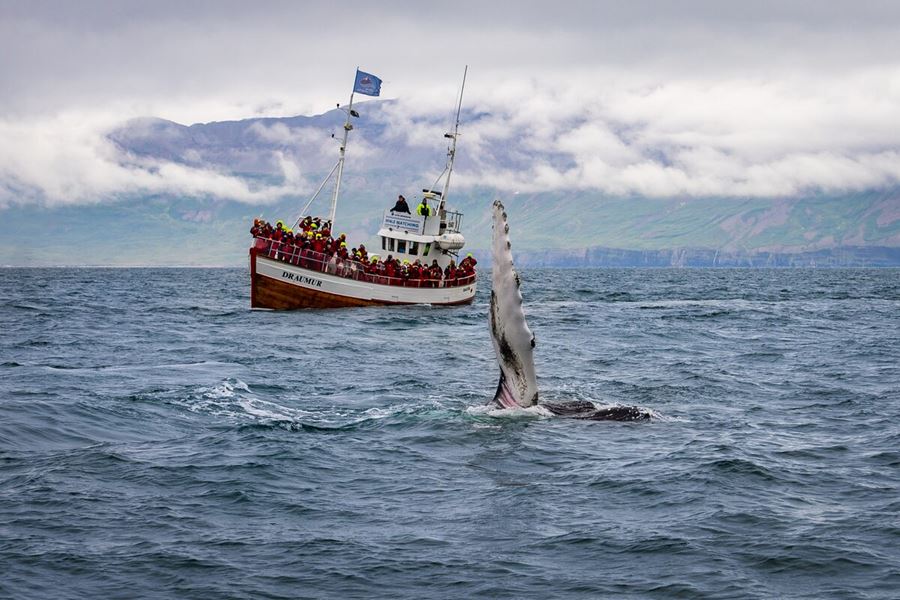
The Westfjords enforce strict marine mammal protection standards that every whale watching operator and passenger must follow. These regulations govern vessel approach distances, engine protocols, and observer conduct to minimize disturbance to humpback whales, minke whales, orcas, and other cetaceans that frequent these Arctic waters. Understanding the rules before you board ensures both compliance and a more meaningful encounter.
Quick answer
Whale watching rules in the Westfjords require vessels to maintain a minimum 100-meter distance from all cetaceans, with stricter 200-meter buffer zones for mothers with calves. Boats must approach from the side—never head-on or from behind—cut engines when within 300 meters, and limit observation time to 30 minutes per pod. Feeding, touching, or attempting to swim with whales is prohibited under Icelandic marine protection law, and violations carry fines starting at 100,000 ISK.
Iceland's marine mammal regulations date to 1994, when commercial whaling pressure and rising tourism created competing demands on North Atlantic cetacean populations. The Westfjords, with year-round resident humpbacks and seasonal minke and orca visitors, became a proving ground for science-backed approach protocols that balance access with conservation. Whale watching rules begin the moment a pod is sighted. Operators must radio their position to other vessels, reducing the likelihood of multiple boats converging on a single group. The 100-meter minimum distance is measured from the nearest animal, not the boat's target whale—if a calf surfaces closer to the stern while the bow tracks the mother, the captain must immediately increase separation. Approach angles matter: lateral positioning allows whales to monitor the boat and choose whether to engage, while head-on or wake approaches trigger avoidance behavior that disrupts feeding and social bonding. Engine shutdown within 300 meters eliminates propeller noise, which masks the low-frequency calls humpbacks use to coordinate dives. Time limits prevent habituation. A 30-minute window per pod gives passengers ample opportunity to observe surfacing, fluking, and blows without conditioning whales to expect or tolerate prolonged human presence. If animals show signs of distress—abrupt dive pattern changes, tight clustering, or rapid directional shifts—the captain must withdraw regardless of elapsed time. The no-contact rule is absolute: even when a curious juvenile approaches the hull, passengers are forbidden from reaching over the rail. Skin oils, sunscreen residue, and bacteria from human hands can damage the protective mucus layer that regulates whale body temperature in cold water. Seasonal closures apply to known calving areas between April and June, when humpback mothers with newborns require undisturbed space to nurse and teach diving skills. These temporary no-go zones shift yearly based on tagging data and aerial surveys, so operators consult updated maps before each departure. The Westfjords' open coastline offers abundant alternative routes, ensuring tours continue without pressuring sensitive habitats. Compliance is enforced by the Icelandic Coast Guard, which conducts random patrols during peak summer months and investigates passenger complaints. Licensed operators carry liability insurance that covers wildlife disturbance penalties, but captains who repeatedly breach distance or time rules risk permit suspension. For visitors, adherence comes down to preparation: ask your outfitter about their protocols, listen to the pre-departure briefing, and remember that the guidelines exist to protect the same animals you came to see.
“The 100-meter minimum distance is measured from the nearest animal, not the boat's target whale—if a calf surfaces closer while the bow tracks the mother, the captain must immediately increase separation.”
Westfjords whale watching operates under Icelandic wildlife protection law, which mandates minimum distances, speed limits, and noise restrictions to prevent disturbance to cetaceans and seabirds. Operators and passengers share responsibility for compliance.
The best arrival window is 09:00–14:00, as morning and early afternoon tours offer the calmest sea conditions for wildlife spotting. Planning your visit during these hours minimizes exposure to the shifting winds common in the Westfjords.
10°C to 15°C; longest daylight hours. Peak activity for whales and tour operations.
5°C to 10°C; decreasing daylight duration. Quieter waters with cooler, crisp conditions.
—; stable morning sea states. Optimal for calm water and clear visibility.
Verdict: For the calmest sea conditions, aim for the 09:00–14:00 arrival window during the summer months of June through August.
Our support team is available daily to assist with inquiries regarding whale watching regulations in the Westfjords. Please refer to the standard operational hours listed below.
Access to the Westfjords region for wildlife observation is free of charge. All whale watching excursions are conducted by private operators who determine their own tour pricing.
Verdict: While regional access is free, visitors pay operator-set fees for whale watching tours, which vary based on the service provider and specific tour package chosen.
Prepare these items and bookings in advance to ensure smooth embarkation and a safe tour.
Everything you need to know about whale watching rules
In Westfjords, whale watching rules prioritize the safety of marine mammals by mandating specific approach distances and vessel speeds. These protocols ensure that boats do not disrupt the natural behavior of humpback or minke whales during your excursion. Following these whale watching rules helps maintain a sustainable environment for local wildlife and contributes to long-term conservation efforts. Local authorities enforce these maritime standards to prevent boat collisions and minimize acoustic disturbance within the fjords. While specific whale watching rules regarding passenger conduct are managed by individual tour operators, they generally require visitors to remain seated during navigation. Always follow crew instructions to ensure your personal safety while observing these gentle giants. Whale watching tours operate at market-set prices, meaning there is 0 ISK entrance fee for the area itself. You only pay for the specific maritime activity booked through authorized providers. You should always verify that your selected tour provider follows established wildlife observation guidelines before departure. Reputable companies clearly display their compliance with ethical maritime practices to ensure a responsible experience for every passenger.